Visible plume vs. thermal signal: which shows a furnace restart first?
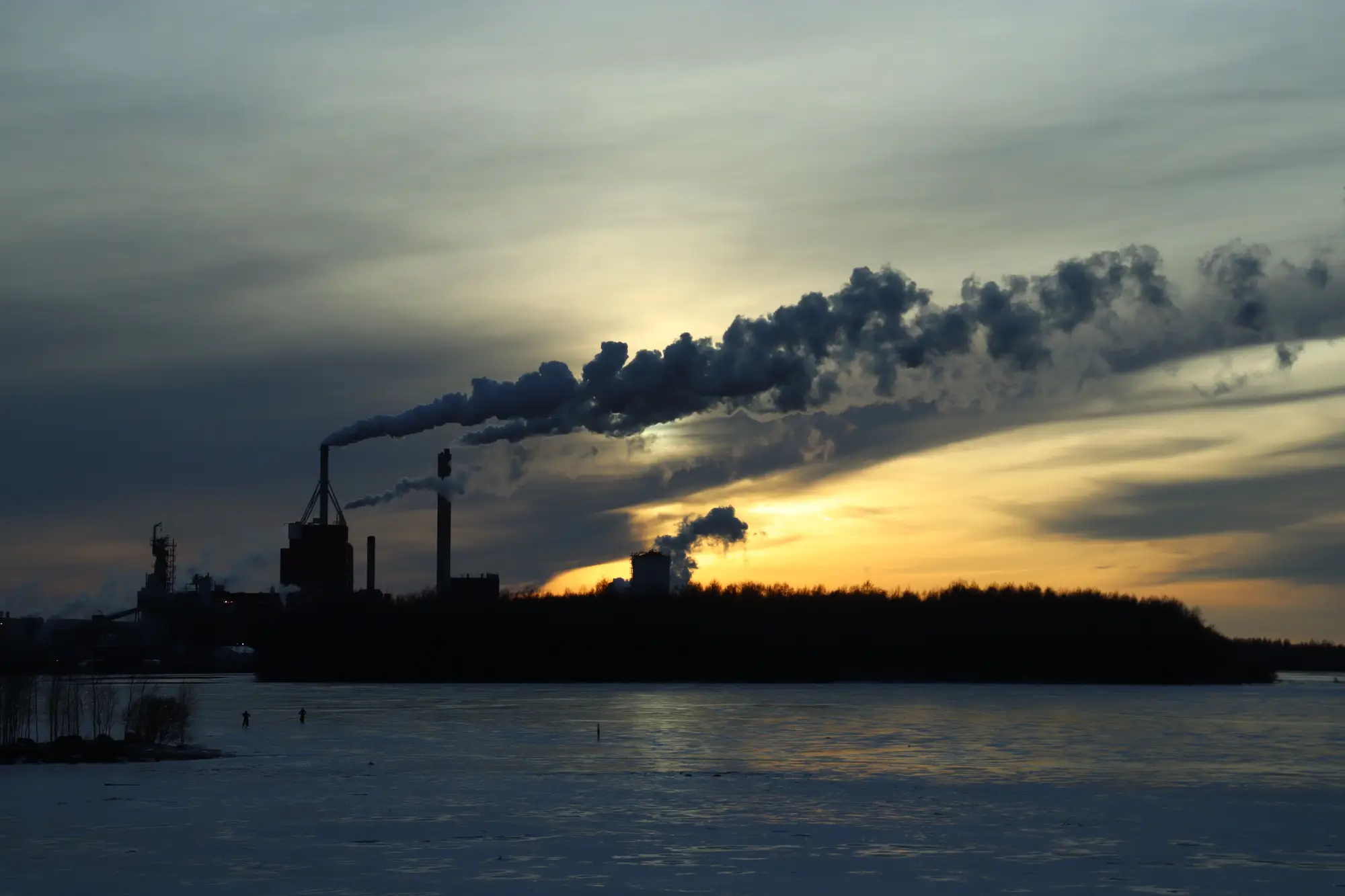
A blast furnace or EAF coming back from an idle doesn't announce itself all at once. The refractory has to come back up to temperature, draft has to get re-established through the stack, and only then does the flue gas look like what it looked like during the last campaign. Two things on a satellite pass pick up pieces of that sequence at different points: the visible plume and the thermal signal. They don't fire together, and knowing which one leads matters if you're trying to catch a restart a week or two ahead of the production print.
What a restart looks like from above
Start with the physical sequence on the ground. Operators bring a furnace back by raising the lining temperature slowly, often over days, to avoid cracking the refractory. During that heat-up, the shell and stack are already warmer than ambient, well before the furnace is running at rate and well before there's enough flue gas volume to form a visible plume. Once the unit is drawing and off-gas is flowing at a normal rate, the stack starts venting water vapor and particulates that condense into something a camera can see, assuming the air temperature and humidity cooperate.
So in the ground-truth sequence, heat comes first and plume comes second. The question is whether a weekly satellite pass catches that order, or whether revisit cadence and sensor limits flatten it out.
Visible plume: unambiguous when it's there, blind the rest of the time
A plume in an RGB pass is about as clean a positive signal as you get. If you can see vapor coming off a stack, something downstream is running hot enough to produce it. The problem is everything that has to go right for that frame to exist. Daytime pass only. No cloud deck over the site. Enough ambient humidity for condensation to form a visible plume rather than a clear, invisible exhaust.
A furnace that's back up to temperature but running in a dry climate on a clear day can look dormant in RGB even though the thermal signature underneath says otherwise. Plume also doesn't distinguish well between a process restart and a cold-weather condensation plume off equipment that was never down in the first place, which is its own source of false positives on sites with multiple stacks.
Thermal signal: earlier, but noisier against the background
The thermal band reads the shell, stack, and roof heat directly, which is why it can pick up a heat-up curve days before there's enough off-gas to form a plume. That's the case for thermal leading on a restart. The tradeoff is resolution and background noise. At the ground sample distances typical of VHR thermal, a furnace restart is a warm blob on a roof, not a labeled process. Ambient heat from a hot day, from paved yard surfaces, or from an adjacent unit that never went down can produce a signal that looks similar from a single pass. Thermal also isn't acquired at the same geometry or time of day as the RGB frame, so lining up "this got warmer" with "this is specifically the furnace in question" takes more than one week of data to be confident about.
So which one shows it first
On the physics, thermal leads. Heat builds in the structure before gas volume builds in the plume. On a single weekly pass in isolation, though, neither signal is reliable enough alone to call a restart with confidence. A warm roof on one pass could be a lot of things. A missing plume on a cloudy week doesn't mean the furnace isn't running. The useful read comes from stacking both against each other over consecutive weeks, alongside a third proxy that doesn't depend on weather or daylight at all: vehicle counts at the gate and loading areas, which tend to step up as a restarting plant brings crews and inbound material back in ahead of the furnace lighting.
That's the logic behind combining all three into one weekly series rather than picking a favorite signal. Industrial Index builds a plant-level utilisation read from vehicle counts, plume presence, and thermal signal together, delivered weekly so a step-change on any one of them gets checked against the other two before it shows up in the index.
If you're tracking a sector where restarts and idles move the quarter, it's worth seeing what that series looks like for your plant list.